

Course Objective & Scope
Asking an LLM to 'analyze this market' or 'evaluate our project plan' typically returns textbook clichés and shallow bullet points. Rigorous analysis requires embedding structured analytical frameworks, explicit evaluation criteria, and adversarial reasoning directly into your prompts.
This course teaches business analysts, strategists, and managers how to translate classic consulting and decision-making frameworks—including MECE decomposition, Root Cause Analysis, First Principles, Pre-Mortem simulations, and Red-Team critiques—into high-precision analytical prompts.
Who Should Attend?
- Strategy, business development, corporate planning, product management, and internal consulting teams
- Business and financial analysts conducting feasibility studies, root-cause investigations, or market evaluations
- Managers preparing option papers and strategic recommendations for executive leadership
- Basic familiarity with prompting is recommended
Key Takeaways
- Replace generic 'analyze this' prompts with structured MECE, PESTEL, Porter's Five Forces, and TOWS frameworks
- Neutralize model sycophancy to surface hidden assumptions, cognitive biases, and logic flaws in business proposals
- Engineer weighted multi-criteria decision matrices and trade-off analyses across competing strategic options
- Run Pre-Mortem failure simulations and second/third-order consequence analyses before launching initiatives
- Structure analytical outputs cleanly along the 'Evidence → Implication → So What → Recommendation' chain
Curriculum
Encoding Analytical Frameworks into Prompts
- Why open-ended 'analyze this' prompts yield textbook platitudes—and how structural constraints force depth
- Applying MECE (Mutually Exclusive, Collectively Exhaustive) issue trees to break down ambiguous problems
- Turning passive SWOT lists into actionable TOWS matrices, Porter's Five Forces, and Value Chain diagnostics
Root Cause, First Principles, and Second-Order Consequence Prompts
- Separating symptoms from underlying drivers using structured 5 Whys and Fishbone (Ishikawa) prompts
- Applying First Principles decomposition to strip away legacy industry assumptions
- Mapping second- and third-order knock-on effects of pricing, policy, or operational changes
Adversarial Reasoning: Red-Teaming, Pre-Mortems, and Scenarios
- Overcoming LLM sycophancy: forcing objective critique and exposing unstated assumptions
- Running Pre-Mortem simulations ('Imagine this launch failed in 12 months—write the post-mortem')
- Steelmanning competing viewpoints and building 2x2 uncertainty scenario matrices with leading indicators
Weighted Decision Matrices and Executive Analysis Workshop
- Constructing weighted multi-criteria trade-off tables across cost, feasibility, risk, and strategic fit
- Enforcing the 'Observation → Evidence → So What? → Actionable Recommendation' narrative chain
- Workshop: Building a reusable Analytical Prompt Toolkit for an active strategic decision in your unit
Other Courses in This Category
-

Practical course on replacing 'vibe checks' with systematic prompt evaluations—building golden test datasets, grading rubrics, edge-case suites, and LLM-as-a-Judge scoring workflows.
- Live Course
- 4 modules
-

Practical course on designing, organizing, versioning, and governing a shared enterprise prompt library so teams stop reinventing the wheel and scale proven AI workflows.
- Live Course
- 4 modules
-

Specialized security training on defending corporate AI assistants and workflows against direct and indirect prompt injection, jailbreaks, system prompt leakage, and untrusted inputs.
- Live Course
- 4 modules
-

Focused governance and prompting course on protecting trade secrets, intellectual property, and regulated client data inside prompts using data classification matrices and problem abstraction.
- Live Course
- 4 modules
-
 Prompt Engineering
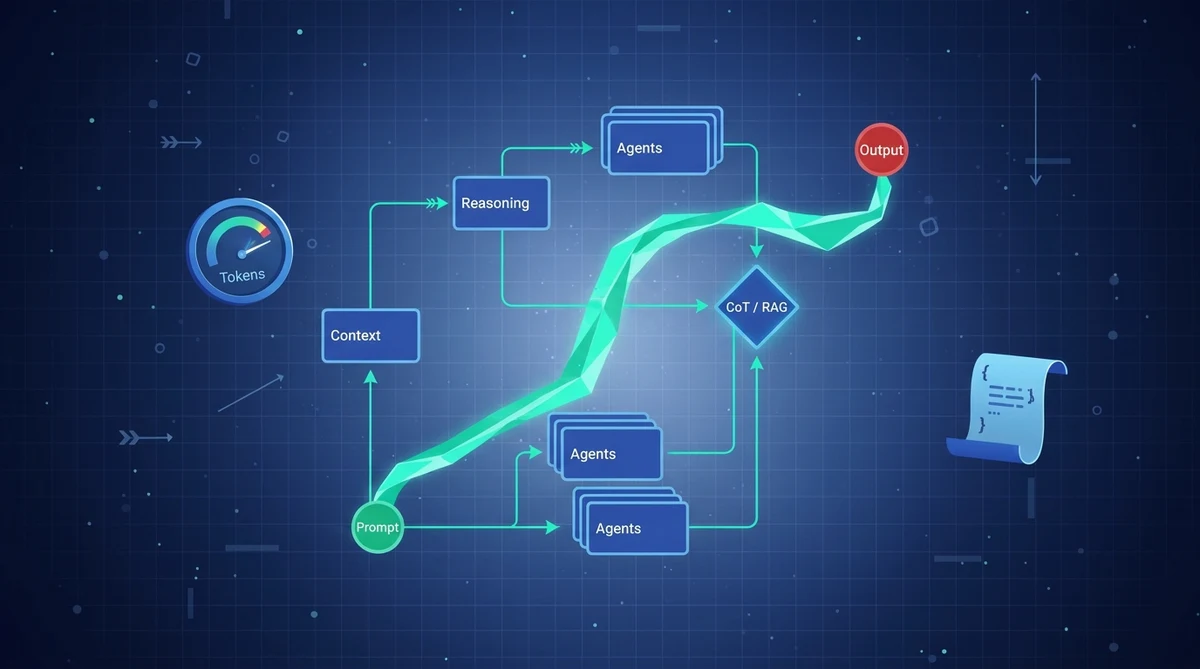
In partnership with Boğaziçi University (BÜYEM): advanced prompt engineering, Chain-of-Thought reasoning, n8n workflow automation, RAG, and multi-agent systems.
- Live Course
- 6 modules
-
Foundational course teaching structured prompt anatomy, zero-shot and few-shot patterns, constraint design, and iterative refinement to get predictable, high-quality outputs from enterprise LLMs.
- Live Course
- 4 modules
Get in touch

