


Course Objective & Scope
Testing a prompt on two or three happy-path examples ('vibe checking') before rolling it out to a team almost always leads to failures when real-world edge cases arrive. Worse, editing a prompt to fix one bug often silently breaks other scenarios. This course brings disciplined Evaluation (Evals) to business and analytical teams without requiring software engineering skills.
Participants learn how to construct a representative Golden Dataset, define objective grading rubrics, combine deterministic checks with LLM-as-a-Judge scoring, and run structured A/B comparisons across prompt versions or models. Teams leave with a complete Test Set and Success Criteria Charter for their workflows.
Who Should Attend?
- Product owners, business analysts, and specialists responsible for the quality of internal AI assistants and workflows
- Operations, customer experience, and quality assurance leads overseeing AI-generated deliverables
- Subject matter experts (SMEs) conducting User Acceptance Testing (UAT) on corporate AI solutions
- Requires familiarity with basic prompting and spreadsheets
Key Takeaways
- Replace ad-hoc 'vibe checks' with repeatable, metrics-driven prompt evaluation cycles
- Curate a balanced Golden Test Dataset covering typical tasks, messy inputs, boundary cases, and adversarial traps
- Write unambiguous Pass/Fail and 1–5 grading rubrics for accuracy, completeness, tone, and source faithfulness
- Combine rule-based checks (format, required fields, forbidden terms) with calibrated LLM-as-a-Judge prompts
- Run regression tests when updating prompts or switching underlying models to verify measurable improvement
Curriculum
Beyond 'Vibe Checks': Why Systematic Evals Matter
- Why testing on 3 easy examples hides failure rates that surface immediately in production
- The regression problem: how tweaking a prompt to fix one issue silently breaks five others
- Defining operational acceptance thresholds for accuracy, latency, and safety before rollout
Building a Representative Golden Test Dataset
- Structuring a balanced test suite: happy paths (50%), messy boundary cases (30%), and adversarial/out-of-scope inputs (20%)
- Sampling anonymized real-world historical cases and generating synthetic edge cases
- Defining reference answers, required factual assertions, and disqualifying failure conditions
Grading Rubrics, Deterministic Checks, and LLM-as-a-Judge
- Deterministic assertions: checking output length, schema validity, required headers, and banned words
- Designing crisp Pass/Fail domain rubrics so human SMEs grade outputs consistently
- Calibrating LLM-as-a-Judge evaluator prompts to align closely with human expert judgments
A/B Benchmarking, Error Bucketing, and Eval Workshop
- Comparing Prompt V1 vs. Prompt V2 (or Model A vs. Model B) side-by-side across the exact same test matrix
- Categorizing failures into actionable error buckets to guide targeted prompt fixes
- Workshop: Creating a 20-case Golden Test Set and Evaluation Scorecard for a real departmental workflow
Other Courses in This Category
-

Practical course on designing, organizing, versioning, and governing a shared enterprise prompt library so teams stop reinventing the wheel and scale proven AI workflows.
- Live Course
- 4 modules
-

Specialized security training on defending corporate AI assistants and workflows against direct and indirect prompt injection, jailbreaks, system prompt leakage, and untrusted inputs.
- Live Course
- 4 modules
-

Focused governance and prompting course on protecting trade secrets, intellectual property, and regulated client data inside prompts using data classification matrices and problem abstraction.
- Live Course
- 4 modules
-
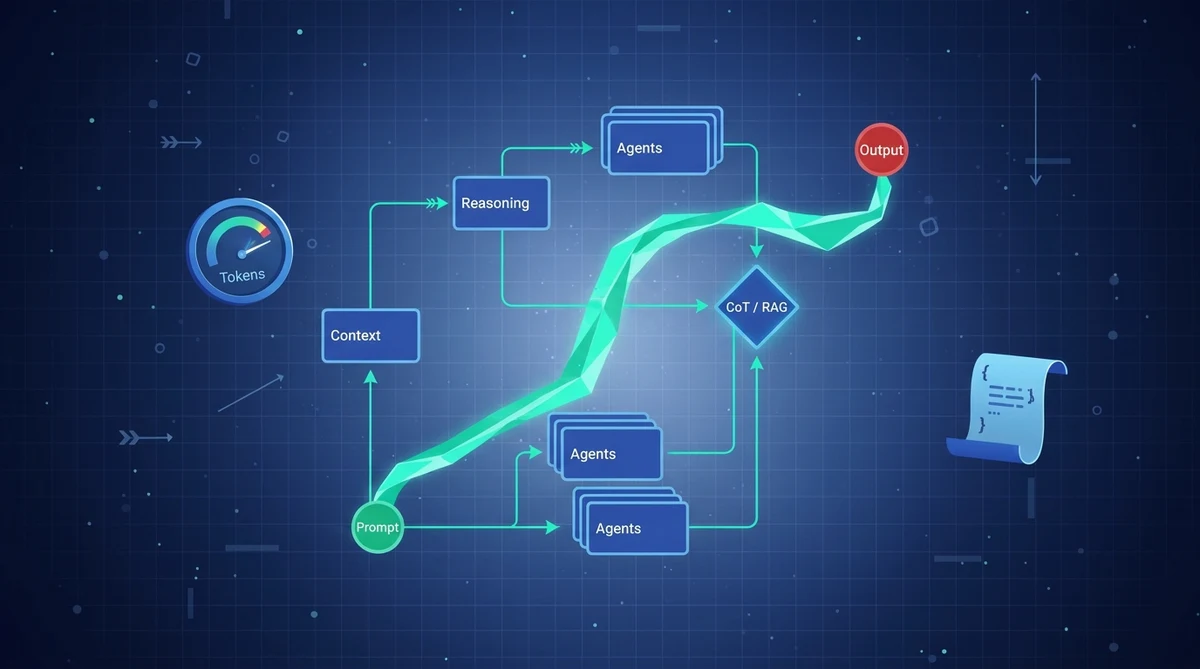 Prompt Engineering
In partnership with Boğaziçi University (BÜYEM): advanced prompt engineering, Chain-of-Thought reasoning, n8n workflow automation, RAG, and multi-agent systems.
- Live Course
- 6 modules
-
Foundational course teaching structured prompt anatomy, zero-shot and few-shot patterns, constraint design, and iterative refinement to get predictable, high-quality outputs from enterprise LLMs.
- Live Course
- 4 modules
-
Hands-on intermediate course focused on solving real corporate workflows through task decomposition, structured data extraction, context integration, and reusable prompt templates.
- Live Course
- 4 modules
Get in touch

