













Hati Glint
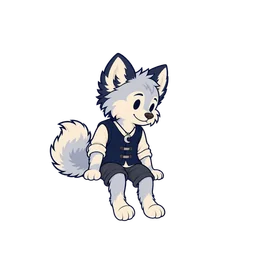
The first glint.
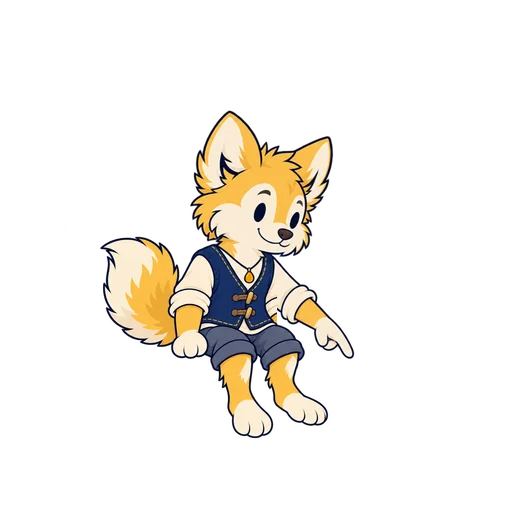
The first Hati.
Glint is where the Hati family begins: the moon’s first light. Hati Glint SQL, which writes the SQL that answers questions about your data, is its first model.
Good for: Questions about your own data.
Local and cloud model families
Meet Hati and Sköll, RuneLab's local and cloud model families. Hati is built to run on your own hardware. Sköll brings more scale from the cloud.
Ask your data. In plain words. Hati reads the schema, writes a read-only SQL query and shows the rows it found.
Sample data. A user asks which five products had the most returns last quarter. Hati reads the orders, returns and products tables, writes a read-only SQL query and lists five rows: Trailpeak Mid Boot 64, Fjell 2P Tent 41, Nordvik Rain Shell 37, Stille Down Vest 29, Kvarts Trekking Poles 22. Nothing in the database is changed.
A calmer inbox. Your call. Hati sorts your mail into groups and drafts a reply that waits for you to send it.
Sample data. Hati sorts eight emails into four groups: Needs reply, Invoices, Updates and Newsletters. It then drafts a reply to Maja Lund about a damaged order. The draft is ready and nothing has been sent.
Company answers. With sources. Ask about your own documents and see the passages each answer comes from.
Sample data. A user asks whether a first-class train ticket for a client visit can be expensed. Hati searches three company documents and answers with two cited passages: train travel is booked in second class, and first class is reimbursed when the trip is over 4 hours or a manager approves it in advance.
From table to report. Drafted. Sköll turns the numbers you give it into a short summary with a chart.
Sample data. From a weekly sales table, Sköll drafts a report for week 39: 804 orders and €82,450 in revenue, online at 47% of revenue, highlights, next steps and a bar chart of revenue by channel. The report draft is saved.
Confidential files. Processed locally. Work on sensitive company files with Hati, right on your own machine.
Sample data. A user asks Hati to summarise the open points in the Q3 board minutes. Hati reads one confidential file on this computer and lists three open points: the choice of a second warehouse site, the 2027 hiring plan and the renewal of the freight contract. Processed by Hati on this computer.
Find a time. Draft the invite. Sköll checks the calendars you connect, picks a time that works and drafts an invite for you to send.
Sample data. A user asks Sköll to find 45 minutes this week for a Q4 planning review with Maja and Jonas. Sköll checks three connected calendars, finds three open times (Tuesday 15:00, Thursday 14:00 and Friday 10:00), picks Thursday 14:00 and drafts an invite. Nothing has been sent.
Slack and Jira. You approve. Sköll reads the thread, proposes a ticket and waits for your approval before it opens one.
Sample data. In a Slack channel, Maja reports checkout errors for some Safari users. Sköll replies that the errors started after Tuesday’s release and offers to open a ticket. After the user approves, Sköll creates Jira ticket FJ-482, Checkout errors on Safari, with high priority, assigned to Jonas Berg with Elin Aas reviewing. It closes with other examples: standup summaries, weekly digests and escalations.
Scripted example with sample data.
Local by design
Access to intelligence that runs on your own machine should not disappear just because an outside provider is unavailable. That is the idea behind Hati: once its model files are on your machine, it is designed to keep working where you are.
Cloud by design
Some work is bigger than one machine should carry. Sköll runs in the cloud, so it needs a connection, and in return it brings more scale without local hardware.
Click a brother to switch the story
Hati is already installed.
The model files must be on your machine before the connection drops.
Your hardware fits the size.
Larger Hati sizes ask more of your machine. Choose a size your hardware supports.
Connected features stay connected.
Cloud services, online tools and external integrations still need the internet.
Local means the model runs where you are. It does not mean everything works without the internet.
Two families
Hati and Sköll are brothers. One works beside you on your own hardware, the other works from the cloud, over the internet. Neither replaces the other.
Local family
The one who stays close.
Built to run locally on your own hardware, for personal work you want close at hand.
Meet HatiCloud family
The one who reaches further.
Runs in the cloud, for larger-scale work without local hardware.
Meet SköllFour plain questions. Your answers point to a family, and sometimes to both.
The local family
From Glint to Full, it follows the moon.
Scroll on, or click a mascot or a name. Click a mascot or a name to switch. Tap a size to switch.
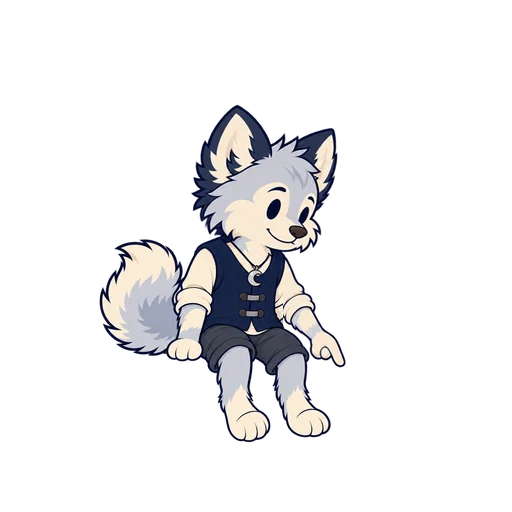
The first glint.
The first Hati.
Glint is where the Hati family begins: the moon’s first light. Hati Glint SQL, which writes the SQL that answers questions about your data, is its first model.
Good for: Questions about your own data.
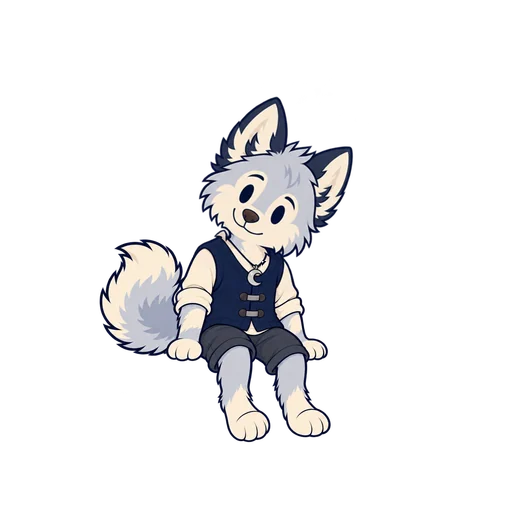
A little more moon.
One step up from Glint.
Crescent sits one step above Glint in the lineup. It is meant for people who want a little more from a local model and have a little more room on their machine.
Good for: Everyday personal work on your own machine.
The steady middle.
The middle of the Hati family.
Half sits in the middle of the lineup, larger than Crescent and lighter than Full. It is meant for hardware with more room to spare.
Good for: Heavier local work on capable hardware.
The whole moon.
The largest Hati.
Full completes the family: the largest Hati, made for capable hardware. It asks the most of your machine and is meant for demanding local work.
Good for: Demanding local work, on hardware that can carry it.
Hati is the local family, made to work close to home on your own hardware. Its four tiers, Glint, Crescent, Half and Full, follow the moon from its first light to the whole. Not the biggest. The one that stays.
Sizes, hardware requirements and availability are published with each release.
The cloud family
From Ember to Zenith, it scales with the work.
Scroll on, or click a mascot or a name. Click a mascot or a name to switch. Tap a size to switch.
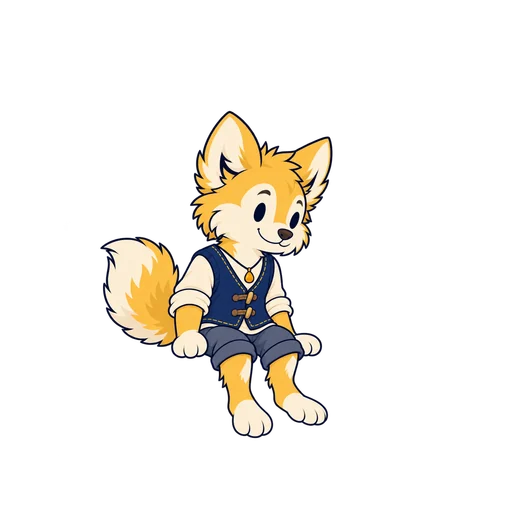
A spark to start.
The smallest and lightest Sköll.
Ember is where the Sköll family begins: the lightest cloud size, meant for smaller workloads. A warm first step into the family.
Good for: Light cloud workloads and first steps.
The sun comes up.
One step up from Ember.
Dawn sits one step above Ember in the lineup. It is meant for cloud work that is growing beyond a first step.
Good for: Everyday cloud workloads.
Bright and busy.
A larger Sköll for bigger jobs.
Flare sits above Dawn, a larger size for heavier cloud workloads. It is meant for work that has outgrown the lighter sizes.
Good for: Heavier cloud workloads.
The sun at its height.
The largest Sköll.
Zenith completes the family: the largest Sköll, meant for demanding cloud workloads. Reach for it when the work calls for everything the family can offer.
Good for: Demanding cloud work.
Sköll is Hati's brother and the cloud family: warm, energetic and ready for bigger work. Its four sizes, Ember, Dawn, Flare and Zenith, scale with the work you bring.
Sizes and availability are published with each release.
Models
Hati Glint SQL is the first Hati model. Kenning is a separate embedding model for Turkish legal search.

ReleasedHati · Turkish text-to-SQL
The first Hati model, specialised for SQL. It turns Turkish questions into SQLite queries.

ReleasedEmbeddings · Turkish legal search
Turkish legal retrieval embeddings, fine-tuned from EmbeddingGemma 2. Not a Hati or Sköll model.
 GlintReleased
 CrescentComing
 HalfmoonComing

Glint is released. The other three tiers are announced by name only.
In practice
The difference is where the model runs. Here is what that means in everyday situations.

Hati
Notes, drafts and files you would rather keep on your own hardware. With Hati, your prompts are processed by the model on your machine.
Hati
An installed Hati model is designed to keep working on your hardware. Online tools and integrations still need the internet.
Sköll
When the work is larger than your own hardware should carry, Sköll runs it in the cloud.
Hati and Sköll
Start close with Hati, and reach out to Sköll when the work grows. The brothers are meant to work side by side.
Get started
RuneLab is introducing the Hati and Sköll families. Here is where to learn more, ask about your team, or run AI on your own hardware today.
I want to understand the families.
See the four sizes in each family and where each one is meant to work.
I want this for my team.
Each model's availability, requirements and terms are published when it is released. In the meantime, ask RuneLab about plans for your team.
I want AI on our own hardware today.
RuneBox is an on-premise box with NVIDIA-based GPUs: models run on the box, with no outside connection needed. RuneGate is a single OpenAI-compatible endpoint that can also run on-premise.
RuneBox and RuneGate are separate RuneLab products. Still deciding? Read the FAQ
FAQ
The short version of how Hati and Sköll work, and where their limits are.
Hati is RuneLab's local model family: it is built to run on your own hardware. Sköll is the cloud family: it runs in the cloud and you reach it over the internet. They are brothers meant to complement each other, not compete.
Once a Hati model is installed on your machine and your hardware supports the size you chose, the model itself does not need an internet connection. Anything that depends on the internet, such as cloud services, online tools, web search or external integrations, still needs one.
It depends on the model size: smaller Hati sizes ask less of your machine, larger ones ask more. Requirements for each size are published with that model's release. Sköll runs in the cloud, so it does not depend on your hardware.
Availability, requirements and license terms are published for each model when it is released. To ask about availability for your team, contact RuneLab.
With Hati, your prompts are processed by the model on your own machine. Tools and integrations you connect to it may send data elsewhere, so check how each one works. With Sköll, requests are processed in the cloud, so they travel over the internet to the service that runs the model.
Choose the family by where you want the work to happen: Hati on your machine, Sköll in the cloud. Then choose a size. Hati comes in Glint, Crescent, Half and Full; Sköll comes in Ember, Dawn, Flare and Zenith, from smallest to largest. For Hati, pick a size your hardware supports.
Intelligence you can get to when you need it, on your terms: Hati close at hand on your own hardware, Sköll over the internet from the cloud. It is not a device promise. Which machines can run a given Hati size depends on that size and on the hardware.


Hati & Sköll by RuneLab
Pick the one that fits your work, or use both.