


Course Objective & Scope
Whenever an enterprise AI assistant interacts with external users or processes untrusted inputs—such as customer emails, job applicant CVs, vendor PDFs, or web pages—it becomes vulnerable to Prompt Injection. Attackers can override system rules, extract confidential instructions, or hijack connected tools using direct jailbreaks or hidden indirect instructions.
Aligned with the OWASP Top 10 for LLM Applications, this course teaches product owners, prompt designers, and security teams how prompt attacks work in practice and how to build multi-layered defenses using structural data isolation, input/output guardrails, privilege restrictions, and adversarial red-teaming.
Who Should Attend?
- Product managers, business analysts, and prompt engineers building internal or customer-facing AI assistants
- Information security, cybersecurity, risk, and governance professionals evaluating LLM applications
- Operations leads automating workflows that ingest external emails, CVs, forms, or web data
- Foundational familiarity with LLM prompting is recommended
Key Takeaways
- Analyze direct prompt injection, indirect (cross-prompt) injection, and jailbreak attack vectors per OWASP LLM Top 10
- Identify how hidden instructions inside CVs, emails, and PDFs hijack summarization and triage workflows
- Harden system prompts using instruction-data separation, delimiter tagging, and post-prompt reinforcement
- Prevent system prompt extraction, competitor endorsement, unauthorized commitments, and off-topic abuse
- Execute structured Red-Teaming test suites to uncover vulnerabilities before deploying corporate assistants
Curriculum
OWASP LLM Top 10 and Prompt Attack Mechanics
- The root architectural vulnerability: why LLMs process instructions and untrusted data in the same token stream
- Direct Prompt Injection and Jailbreaks: persona hijacking, hypothetical framing, and encoding tricks
- System Prompt Leakage: how attackers trick assistants into revealing proprietary rules and internal schemas
Indirect Prompt Injection in Corporate Workflows
- Trojan inputs: malicious instructions hidden inside resumes, vendor PDFs, incoming emails, or web pages
- How indirect injection hijacks RAG pipelines, email summarizers, and automated triage workflows
- Risks of Excessive Agency when compromised prompts can trigger external tools, APIs, or emails
Defensive Design: Prompt Hardening and Guardrail Layers
- Structural isolation of untrusted inputs, instruction sandwiching, and strict scope refusal rules
- Why prompt-only defenses are never 100% sufficient: pairing system rules with Input/Output Guardrail classifiers
- Applying Least Privilege and mandatory human confirmation before any state-changing action
Adversarial Red-Teaming and Hardening Workshop
- Building a practical Red-Team test suite covering security, privacy, and brand-reputation traps
- Testing against unauthorized discounts, legal advice, competitor praise, and toxic output generation
- Workshop: Attacking, diagnosing, and hardening a vulnerable corporate assistant prompt
Other Courses in This Category
-

Focused governance and prompting course on protecting trade secrets, intellectual property, and regulated client data inside prompts using data classification matrices and problem abstraction.
- Live Course
- 4 modules
-
 Prompt Engineering
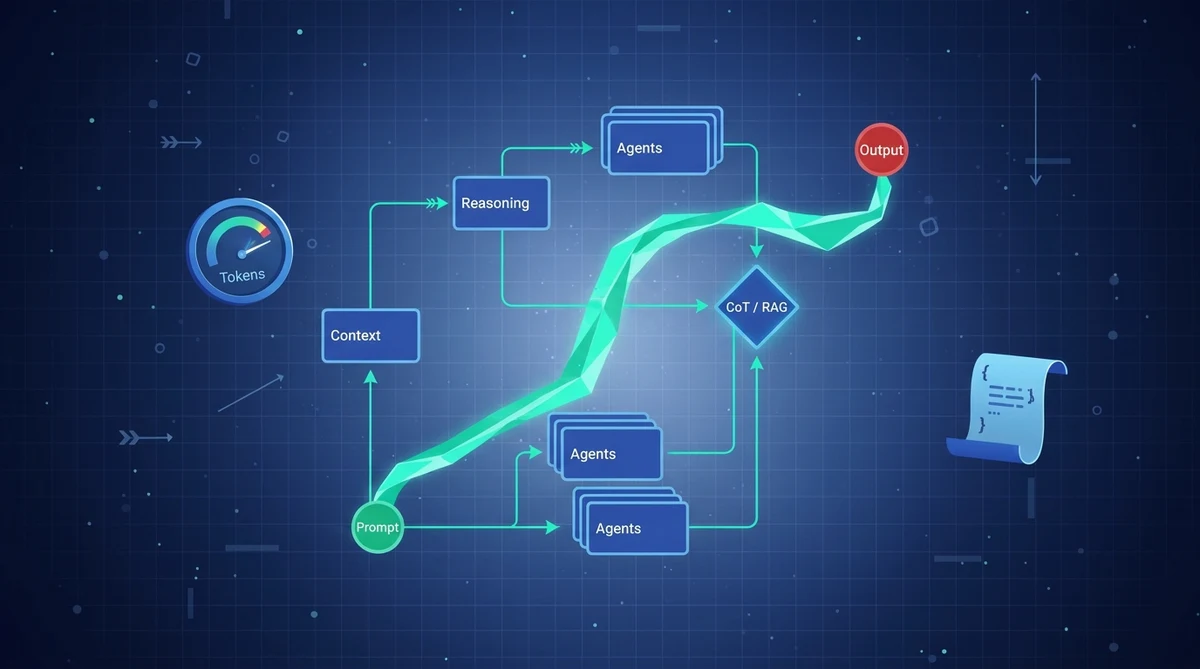
In partnership with Boğaziçi University (BÜYEM): advanced prompt engineering, Chain-of-Thought reasoning, n8n workflow automation, RAG, and multi-agent systems.
- Live Course
- 6 modules
-
Foundational course teaching structured prompt anatomy, zero-shot and few-shot patterns, constraint design, and iterative refinement to get predictable, high-quality outputs from enterprise LLMs.
- Live Course
- 4 modules
-
Hands-on intermediate course focused on solving real corporate workflows through task decomposition, structured data extraction, context integration, and reusable prompt templates.
- Live Course
- 4 modules
-
Advanced course covering production system prompt architecture, complex reasoning patterns (ReAct, self-correction, decomposition), tool-use instructions, and cross-model optimization.
- Live Course
- 4 modules
-
Practical course on designing modular corporate templates that combine domain personas, strict operational instructions, and deterministic output schemas (Markdown, tables, JSON).
- Live Course
- 4 modules
Get in touch

