

Course Objective & Scope
To get better answers from AI, employees naturally want to provide rich context—often pasting NDA-protected client briefs, unreleased financials, proprietary pricing formulas, or R&D specs directly into prompts. This course teaches teams how to get high-value AI assistance on sensitive work without exposing confidential assets or intellectual property.
Participants learn how to map corporate data classification tiers to approved AI environments, apply structural problem abstraction and sanitization so sensitive details never leave the boundary, and prevent cross-team context leakage inside shared enterprise workspaces.
Who Should Attend?
- Specialists and managers handling sensitive contracts, pricing models, R&D, strategy, or M&A materials
- Legal counsel, intellectual property specialists, information security, compliance, and procurement teams
- Consultants and account teams working under strict client Non-Disclosure Agreements (NDAs)
- No technical prerequisites required
Key Takeaways
- Identify trade secrets, unreleased financials, NDA-bound client assets, and proprietary IP before constructing prompts
- Apply a clear Data-to-Tool Authorization Matrix across public, enterprise-tenant, and on-premise AI tools
- Use structural abstraction and de-identification to solve sensitive problems without exposing underlying secrets
- Prevent accidental internal data exposure when sharing prompt templates, conversation links, or project workspaces
- Navigate copyright ownership and third-party IP risks in AI-assisted documents, visuals, and code
Curriculum
Trade Secrets, NDAs, and Intellectual Property in Prompts
- Beyond PII: protecting pricing algorithms, M&A plans, unreleased financials, source code, and bid strategies
- Contractual compliance: when uploading client files to cloud AI services violates Non-Disclosure Agreements (NDAs)
- Intellectual property realities: copyrightability of AI outputs and avoiding third-party IP infringement
Data Classification and the AI Tool Authorization Matrix
- Mapping the 4 corporate data tiers: Public, Internal, Confidential, and Restricted/Highly Confidential
- Matching data tiers to approved environments: consumer tools vs. Enterprise Tenants vs. private/on-prem deployments
- Enforcing internal information barriers so shared company assistants do not leak HR, payroll, or deal data internally
Structural Problem Abstraction and Context Sanitization
- Isomorphic abstraction: translating a sensitive strategic or legal problem into an anonymized structural equivalent
- Numerical scaling and token replacement: disguising financial figures while preserving ratios and analytical logic
- Local execution pattern: asking the LLM for the formula, script, or template while keeping raw data strictly local
Workspace Sharing Hygiene and Governance Workshop
- Sanitizing few-shot examples before publishing them to shared Prompt Libraries, Custom GPTs, or Projects
- Stripping hidden document artifacts (tracked changes, author comments, hidden spreadsheet tabs) before file upload
- Workshop: Building a Departmental Data Sharing Matrix and Safe Context Preparation Guide
Other Courses in This Category
-
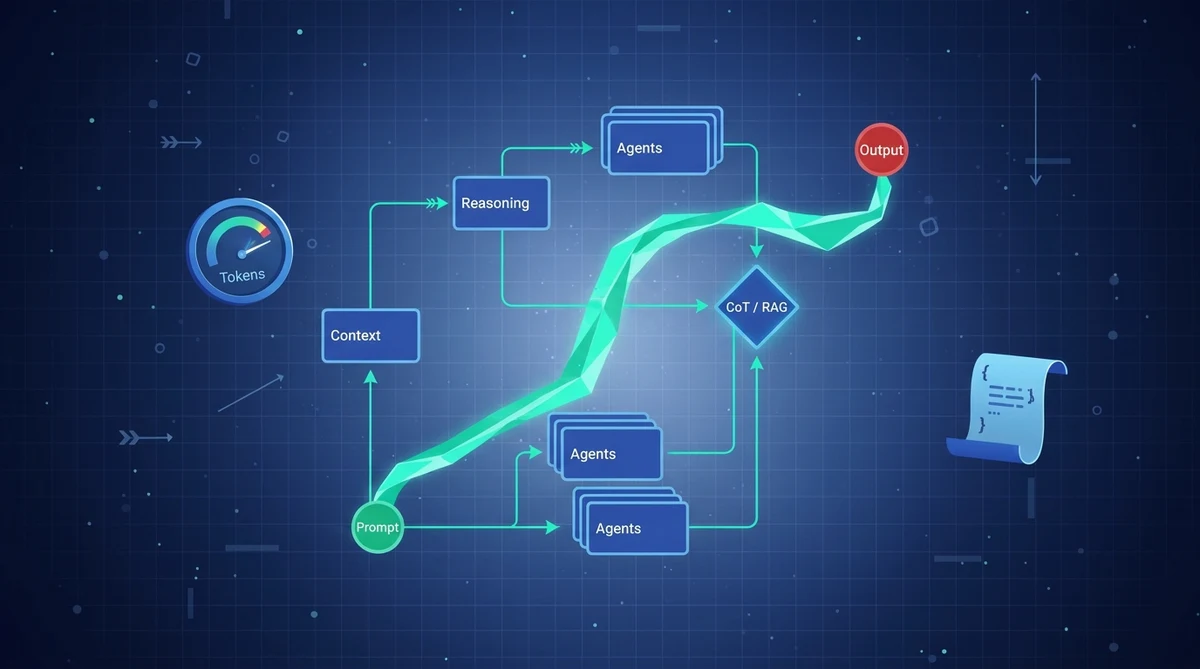 Prompt Engineering
In partnership with Boğaziçi University (BÜYEM): advanced prompt engineering, Chain-of-Thought reasoning, n8n workflow automation, RAG, and multi-agent systems.
- Live Course
- 6 modules
-

Foundational course teaching structured prompt anatomy, zero-shot and few-shot patterns, constraint design, and iterative refinement to get predictable, high-quality outputs from enterprise LLMs.
- Live Course
- 4 modules
-
Hands-on intermediate course focused on solving real corporate workflows through task decomposition, structured data extraction, context integration, and reusable prompt templates.
- Live Course
- 4 modules
-
Advanced course covering production system prompt architecture, complex reasoning patterns (ReAct, self-correction, decomposition), tool-use instructions, and cross-model optimization.
- Live Course
- 4 modules
-
Practical course on designing modular corporate templates that combine domain personas, strict operational instructions, and deterministic output schemas (Markdown, tables, JSON).
- Live Course
- 4 modules
-
Intermediate course on decomposing complex corporate processes into sequential, branching, and review-gated prompt chains that deliver reliable end-to-end outputs.
- Live Course
- 4 modules
Get in touch

