


Course Objective & Scope
In most organizations, top performers quietly build effective prompts while their teammates reinvent the wheel from scratch every day. Yet simply dumping hundreds of unvetted prompts into a shared spreadsheet creates a 'prompt graveyard' nobody uses. This course teaches how to architect, curate, and govern a high-adoption Corporate Prompt Library.
Participants learn how to refactor individual prompts into parameterized templates, design a role-and-task taxonomy, document each entry with clear input/output examples and risk notes, and establish a peer-review and versioning lifecycle across platforms like SharePoint, Notion, Confluence, or workspace assistants.
Who Should Attend?
- Department managers and team leads aiming to scale proven AI workflows across their teams
- Internal AI Champions, digital transformation specialists, L&D managers, and knowledge leads
- Operations and enablement professionals maintaining shared repositories in SharePoint, Notion, or Confluence
- No programming background required
Key Takeaways
- Convert ad-hoc personal prompts into modular, parameterized templates with standardized placeholders
- Design an intuitive library taxonomy indexed by business function, workflow stage, and task type
- Author complete Prompt Cards featuring purpose, input requirements, recommended model, sample output, and review rules
- Establish governance workflows for peer review, version control, and retiring broken or outdated prompts
- Drive team adoption by integrating the prompt library directly into daily workspaces and onboarding
Curriculum
From 'Prompt Graveyard' to Living Library: Architecture & Taxonomy
- Why uncurated spreadsheets of prompts fail—and what makes a shared library genuinely usable
- Designing a clear taxonomy: Department → Workflow → Task Verb → Output Type
- Modular library components: full task templates, reusable persona blocks, style guides, and audit snippets
The Anatomy of a Standardized Enterprise Prompt Card
- The 7 essential fields of a Prompt Card beyond the raw prompt text itself
- Standardizing variable syntax (`{{CLIENT_CONTEXT}}`, `{{RAW_DATA}}`) and user fill-in instructions
- Documenting recommended model modes, sample input/output pairs, and mandatory human verification notes
Library Governance, Peer Review, and Version Control
- The contribution lifecycle: Submission → 5-Case Testing → SME Approval → Published Catalog
- Versioning prompts (v1.0 → v1.1) when underlying models update or corporate policies change
- Pruning and deprecating obsolete templates to keep library quality high
Adoption Strategies and Library Build Workshop
- Delivering prompts where work happens: SharePoint, Confluence, Notion, text expanders, and shared AI Projects
- Onboarding playbooks and peer-sharing rituals that keep the library active
- Workshop: Designing your unit's Library Taxonomy and publishing the first 10 verified Prompt Cards
Other Courses in This Category
-

Specialized security training on defending corporate AI assistants and workflows against direct and indirect prompt injection, jailbreaks, system prompt leakage, and untrusted inputs.
- Live Course
- 4 modules
-

Focused governance and prompting course on protecting trade secrets, intellectual property, and regulated client data inside prompts using data classification matrices and problem abstraction.
- Live Course
- 4 modules
-
 Prompt Engineering
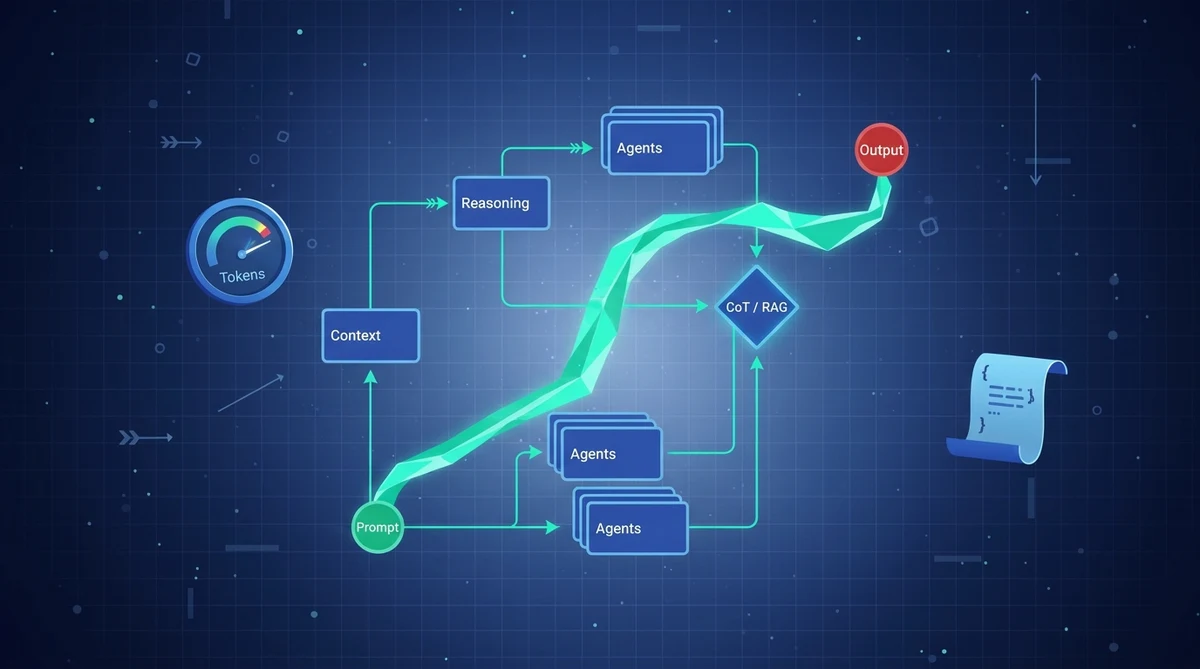
In partnership with Boğaziçi University (BÜYEM): advanced prompt engineering, Chain-of-Thought reasoning, n8n workflow automation, RAG, and multi-agent systems.
- Live Course
- 6 modules
-
Foundational course teaching structured prompt anatomy, zero-shot and few-shot patterns, constraint design, and iterative refinement to get predictable, high-quality outputs from enterprise LLMs.
- Live Course
- 4 modules
-
Hands-on intermediate course focused on solving real corporate workflows through task decomposition, structured data extraction, context integration, and reusable prompt templates.
- Live Course
- 4 modules
-
Advanced course covering production system prompt architecture, complex reasoning patterns (ReAct, self-correction, decomposition), tool-use instructions, and cross-model optimization.
- Live Course
- 4 modules
Get in touch

